Skip to content
Free shipping on orders over $75

BPC-157

Recovery & tissue support

4.8
BPC-157
Vial with laboratory glassware
Researcher with microscope
Water droplets macro

Size

Quantity

Purchase frequency

In stock · Ships within 24 hours

Third-party
tested

Free shipping
over $75

COA
included

Reconstitution: Add 2mL bacteriostatic water per 5mg vial (2.5mg/mL). Reconstituted solution should be stored at 2-8°C and used within 30 days. Unreconstituted vials: -20°C. Refer to your institutional protocol for specific preparation requirements.

For laboratory research use only. Not for human consumption.

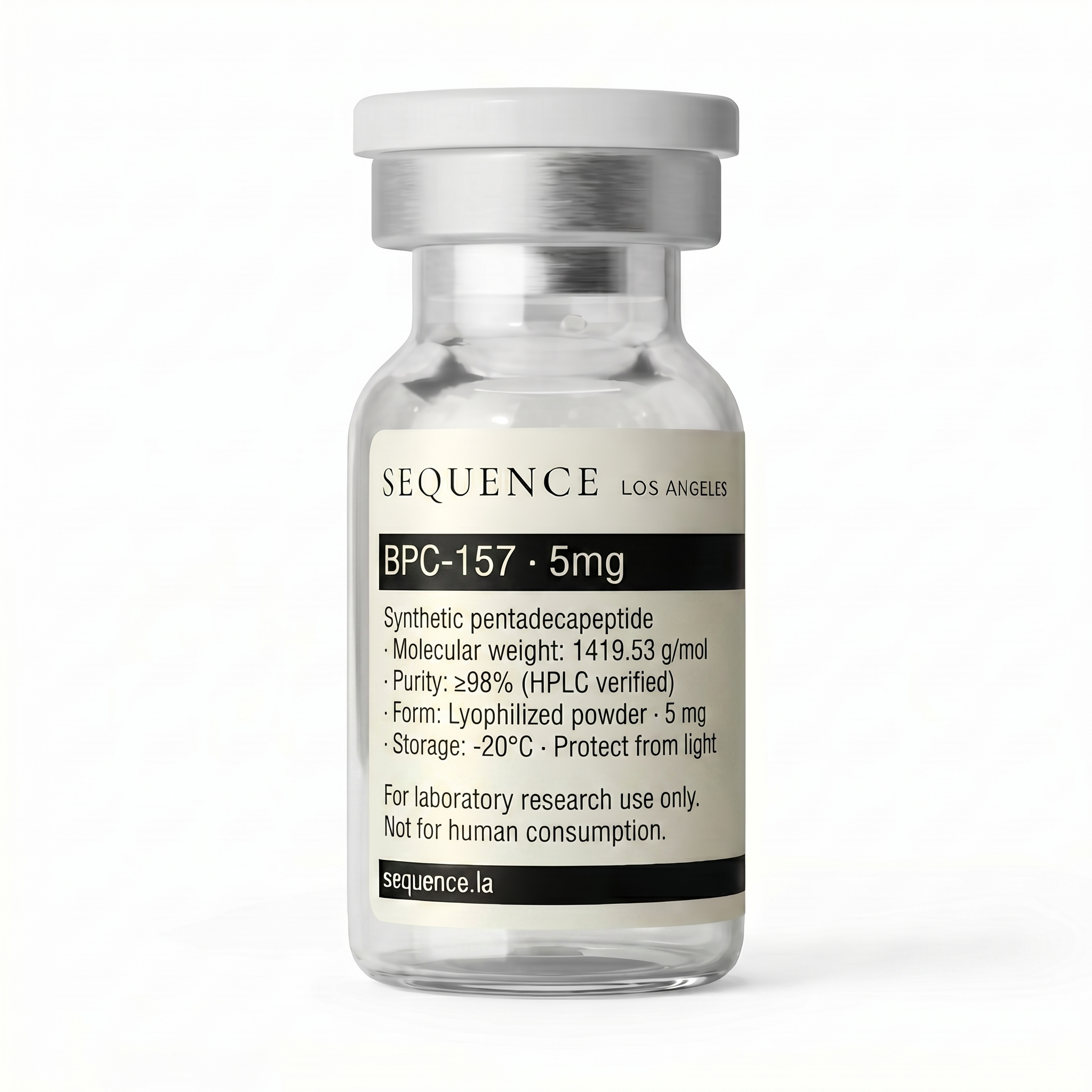
Purity

≥98%

Molecular weight

1419.53 g/mol

Form

Lyophilized powder

Storage

Store at -20°C. Protect from light and moisture.

Amino acid sequence

Gly-Glu-Pro-Pro-Pro-Gly-Lys-Pro-Ala-Asp-Asp-Ala-Gly-Leu-Val

Independent lab results — HPLC purity and mass spectrometry identity confirmation.

Download COA (PDF) ↗

HPLC purity verified

Sometimes

Mass spec ID confirmed

Rarely

Batch-specific COA

Reused COA

Published COA before purchase

PubMed citations on PDP

SequenceOthers

What purity level is this?

Every batch is verified at ≥98% purity via HPLC analysis by an independent laboratory. The COA for your specific batch is available on this page.

What is the difference between 5mg and 10mg?

The peptide is identical. The 10mg vial contains twice the quantity at a lower per-mg cost ($6.90/mg vs $7.80/mg).

How should I store this?

Unreconstituted: -20°C freezer, protected from light. Reconstituted: 2-8°C refrigerator, use within 30 days.

BPC-157

Key Benefits

01

Tissue models

Studied for accelerated tendon and ligament repair in animal models.

02

Gut lining

Research shows protective effects on gastrointestinal epithelial cells.

03

Connective tissue

Upregulates growth hormone receptors in tendon-derived fibroblasts.

04

Well-studied

Over 100 published studies across multiple preclinical models.

Peptide science

How It Works

Step 1

Receptor binding

BPC-157 binds to specific cell surface receptors, triggering a defined downstream signaling cascade. Each peptide targets a unique receptor profile.

Step 2

Signal activation

The receptor interaction activates intracellular pathways that regulate gene expression, protein synthesis, and cellular behavior in the target tissue.

Step 3

Biological response

BPC-157 is a 15-amino-acid peptide fragment derived from gastric juice. In preclinical models, it has been shown to upregulate growth hormone receptor expression in tendon cells, promote angiogenesis at injury sites, and accelerate epithelial cell migration. Its mechanism involves multiple pathways including the NO system, FAK-paxillin, and the GH receptor axis.

BPC-157

10mg · $69.00