Understanding peptides
Peptides: what they are, what the research shows.
Peptides are short chains of amino acids — smaller than proteins but built from the same building blocks. The human body produces thousands of endogenous peptides that serve as signaling molecules between cells.

How peptides work
Each peptide binds to specific receptors, triggering defined downstream signaling cascades. This specificity is what makes them useful research tools — they allow investigators to study individual pathways in isolation.
Different peptides target different receptor systems, enabling research into areas including tissue biology, endocrine function, and immune modulation.

Research compounds,
not pharmaceuticals.
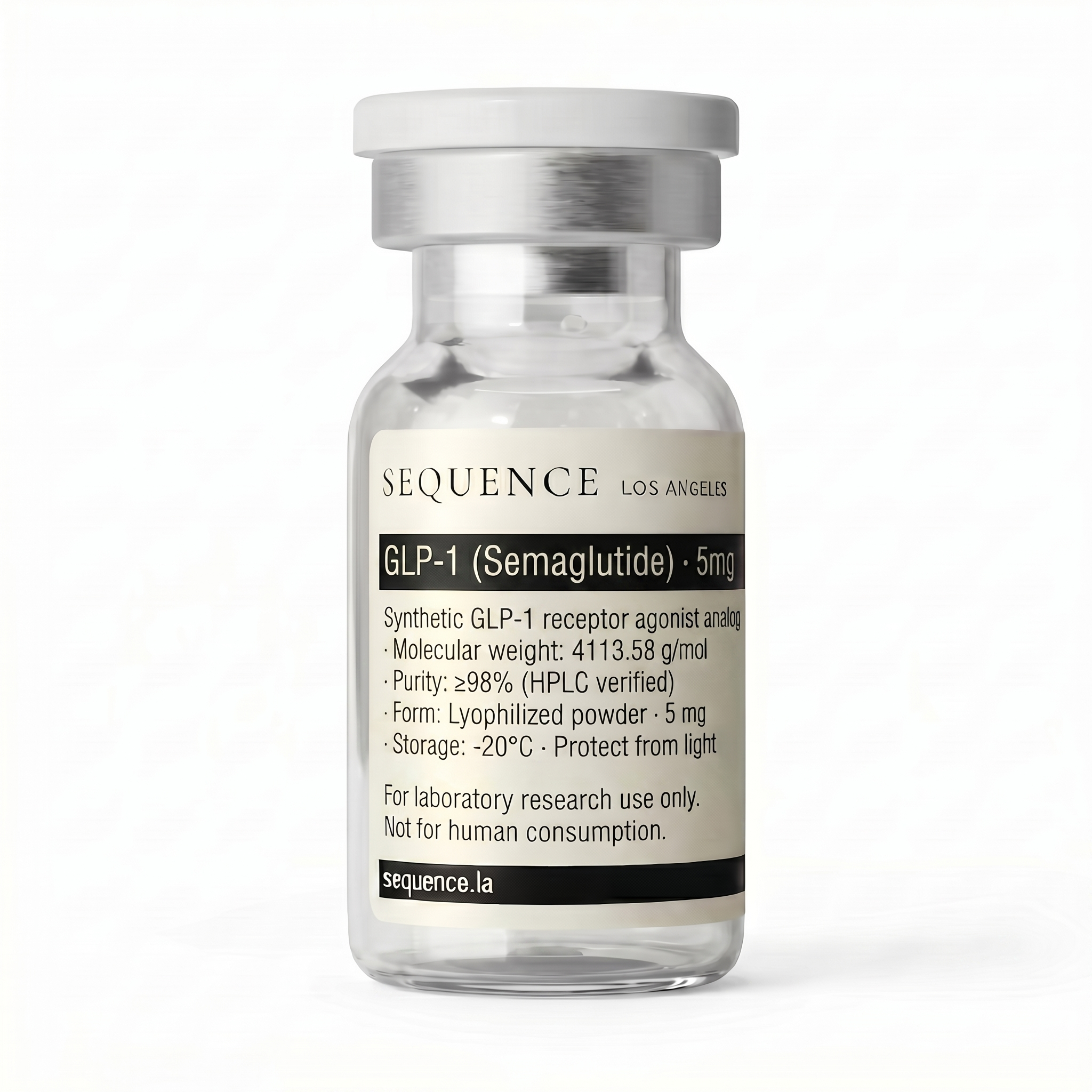
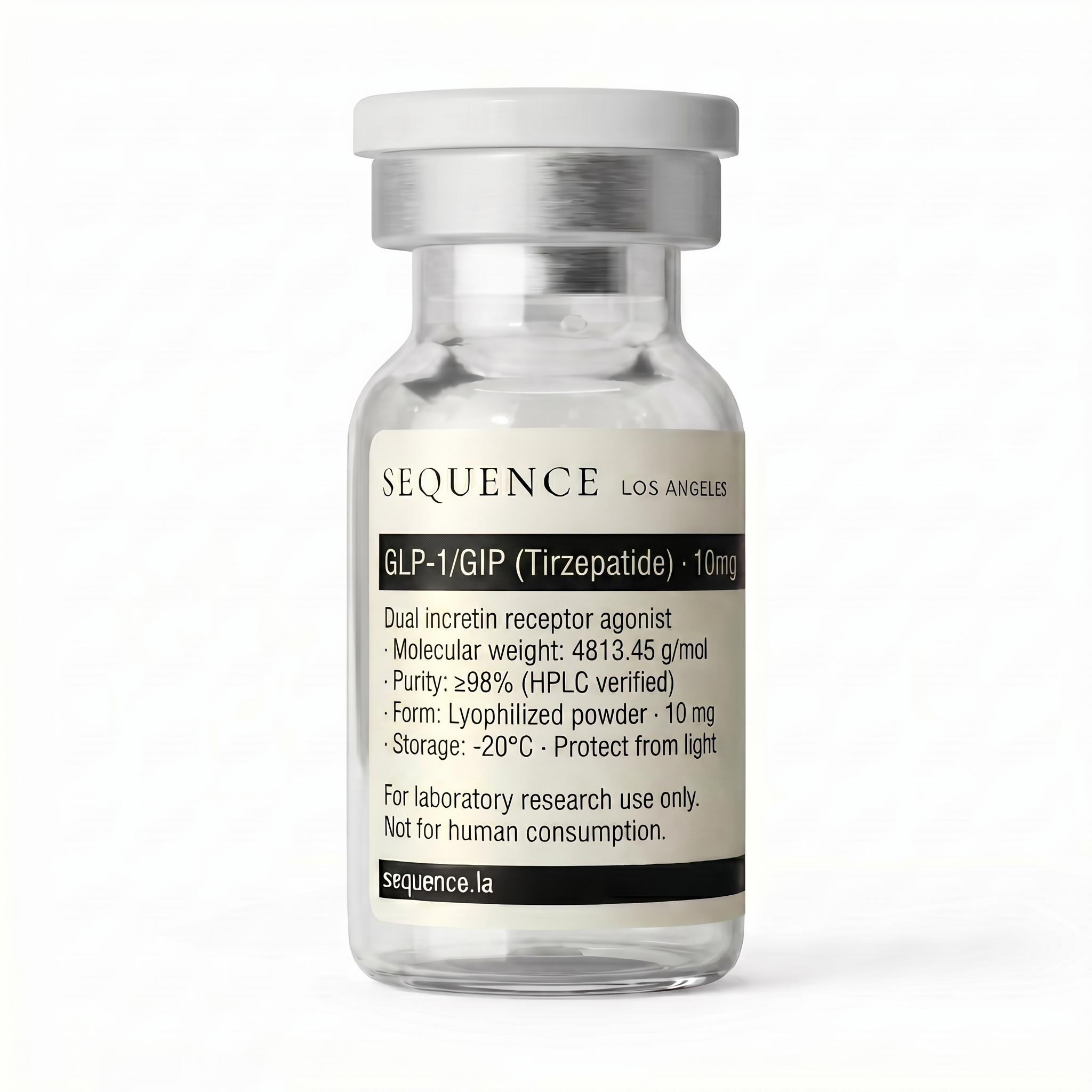
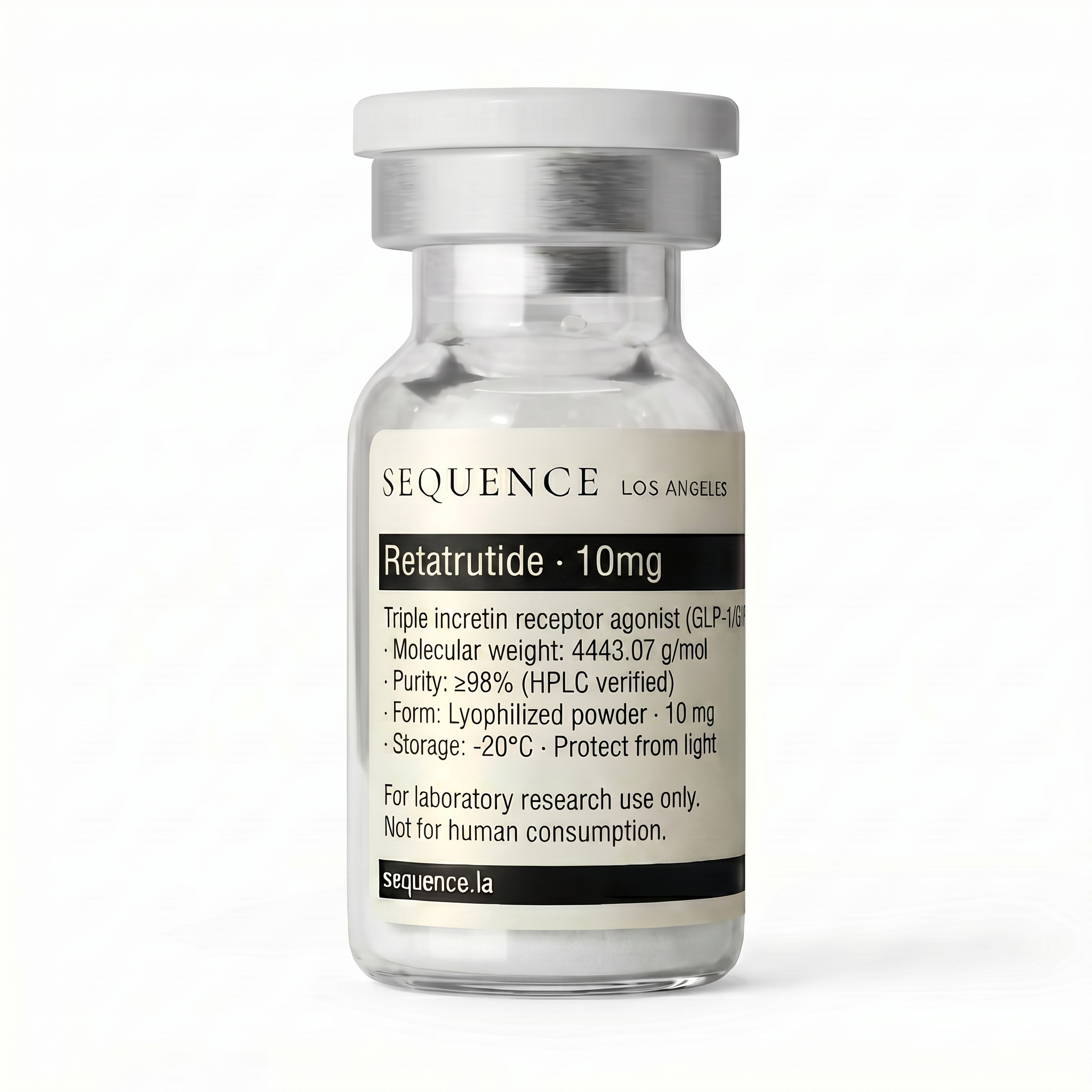
The peptides sold by Sequence are classified as research compounds. They are not FDA-approved drugs, and we do not make therapeutic claims.
Unlike over-the-counter supplements, research peptides are not evaluated by the FDA for safety or efficacy in treating any condition. They require careful handling, proper storage, and use in accordance with applicable research protocols and institutional guidelines.
How to evaluate
a peptide supplier.
Not all suppliers are equal. These are the markers that separate legitimate research suppliers from the rest.
Certificates of analysis
HPLC and mass spectrometry data from an independent lab, not self-reported purity claims.
Batch-specific testing
Each production batch should have its own COA, not a single certificate reused across batches.
Transparent sourcing
The supplier should be willing to disclose their synthesis partner and quality control processes.
Proper storage
Lyophilized peptides should be stored frozen and protected from light and moisture.
Important notice
These compounds are biologically active and intended for research use only. They are not intended for human consumption. Researchers should follow all applicable institutional safety protocols and consult relevant literature before designing experiments with these compounds.